Retail · a customer journey
Supermarket order to doorstep
One online grocery order on an Example Tuesday, over real Auckland streets. Six small agents watch, suggest and draft; a person says yes to anything that goes to a customer.
SimulatedStats NZ prices · snapshotIllustrative route and interior
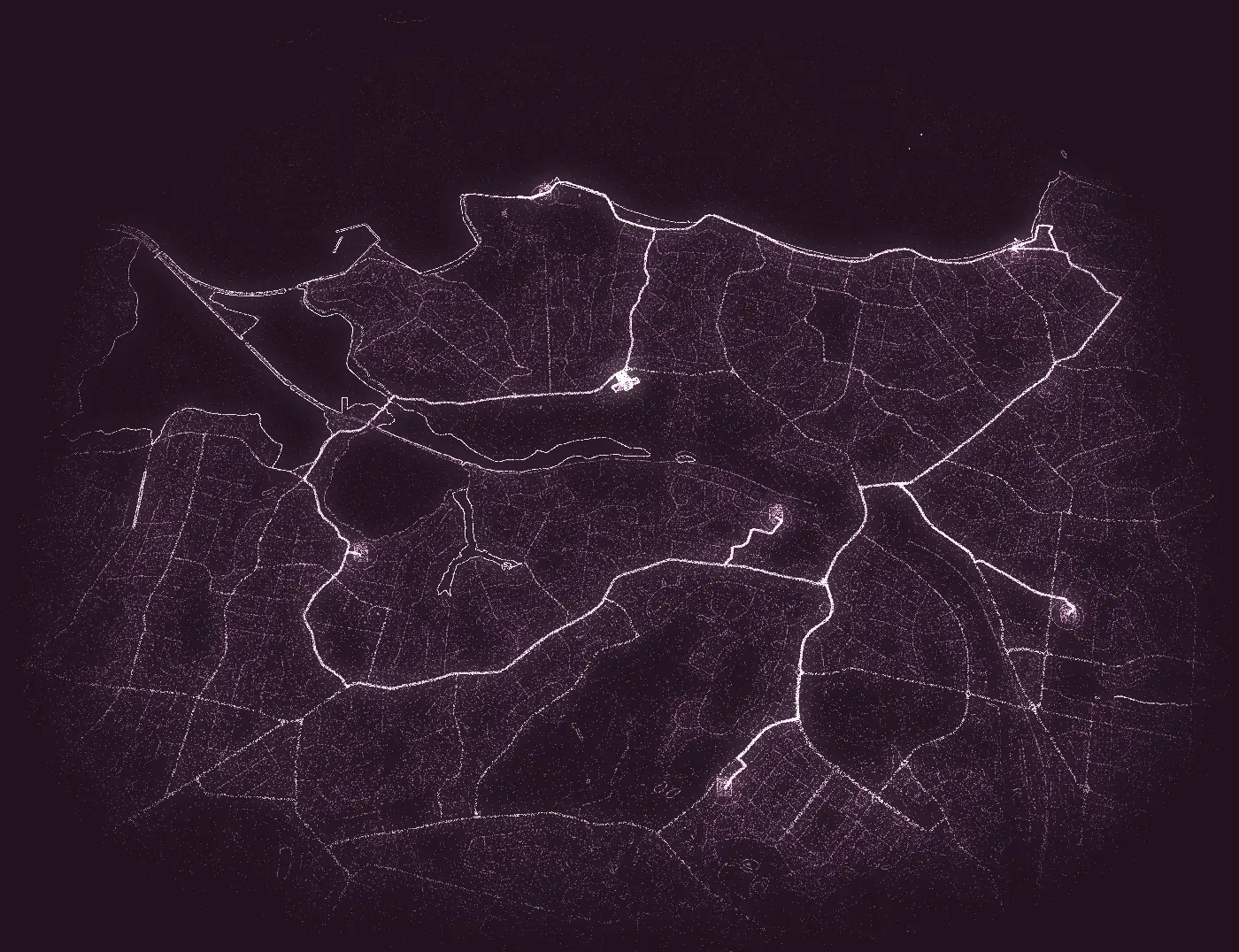
On the map
- Supermarket twinExample, not a model of this siteOrder in. 13 items.
- Van 1Waiting at the storeSimulated · drawn larger than life
- Household AWindow 3:30–4:30 pmFictional · a real street, no address
- Household BWindow 4:00–5:00 pmFictional · a real street, no address
- Household CWindow 4:00–5:00 pmFictional · a real street, no address
- Household DWindow 4:00–5:00 pmFictional · the order we follow
- Household EWindow 4:30–5:30 pmFictional · a real street, no address
- Household FWindow 4:30–5:30 pmFictional · a real street, no address
Real streets, buildings and coast, about 7 km across; heights ×3. Elevation: LINZ (CC BY 4.0) via AWS Terrain Tiles. Map data © OpenStreetMap contributors, via OpenFreeMap.
Order placed
The Example customer at household D orders 13 items for delivery on Tuesday, 4:00–5:00 pm. At Stats NZ average prices the basket comes to about $87.88. The Intent agent reads it and flags one risk: butter was running low on the shelf this morning.
- To household D · from the Intent agent
Thanks, your order is in for Tuesday, 4:00–5:00 pm. 13 items. We'll message you if anything changes.
Draft · waiting for a person's yes
The proof
What the run shows
Measured at the end of the Example day. Simulated Every figure comes from this one run of the sim, not from a real store or real customers.
- Orders delivered in their window
- 6 of 6One rebooked by the customer to 7:00–8:00 pm and delivered at 7:21 pm on the evening run.
- Substitutions accepted
- 1 of 1Butter swapped for another 500 g butter after the customer said yes.
- Missed delivery recovered
- 1 of 1Nobody home at D. The customer chose to rebook.
- Customer effort saved
- 59 minAcross the six households, from the assumptions below.
- Messages sent by assembl
- 010 drafts written. Each waits for a person's yes.
- An ETA you can trust, so no one waits by the door: 6 min × 6 households
- A swap settled in one reply, not a refund claim later: 9 min × 1
- A missed drop rebooked in one reply, not a call to support: 14 min × 1
Who does what
Six small agents, each with a limit
Each agent has one job and a written limit on what it may do alone. None of them sends a message, moves money or changes an order. A person approves every draft.
- Intent agentobserve
Reads the order: what's in it, the window and any note for the driver.
- Picking agentobserve
Follows the pick: which aisle, what's found, what's missing.
- Substitution agentrecommend
Finds swaps for anything out of stock. It suggests; the customer decides.
- Route agentact with approval
Plans the van's drops around the windows. The dispatcher approves the run before it goes.
- Wait agentdraft
Keeps every ETA honest and drafts the message. A person sends it.
- Resolution agentrecommend
When a drop fails, offers the customer options. Nothing changes without their yes.
The basket
Priced from Stats NZ
Household D's 13 items at Stats NZ average retail prices. The swap prices are simulated: Stats NZ publishes one average for butter, not one per brand or size.
Snapshot Stats NZ average retail prices, September 2026, built into this page. On the lab site the latest published month replaces them.
| Item | Qty | Average price | Line |
|---|---|---|---|
| Basket | $87.88 | ||
The journey in words
Order to doorstep, step by step
The same run as the map, as text. It follows your choices and the "make it go wrong" switch.
- Order placed, 10:42 am. The Example customer at household D orders 13 items for Tuesday, 4:00–5:00 pm. The Intent agent (observe) reads the order and flags butter as low. Draft to D: order confirmed.
- Picking, 2:05 pm. A picker walks the aisles of an illustrative store. The Picking agent (observe) follows: 12 of 13 found, the butter shelf is empty.
- Out of stock, 2:31 pm. The Substitution agent (recommend) suggests another 500 g butter at the same price, or two 250 g blocks for $1.10 more. Draft to D asking which. The customer approves another 500 g butter.
- Packed and loaded, 2:40 pm. Six orders in chilled, frozen and ambient crates, loaded last drop first. The Route agent (act with approval) plans 27.1 km and six drops; the dispatcher approves.
- On the road, 3:45 pm. The van leaves. The Wait agent (draft) drafts ETAs for A (3:54 pm) and B (4:08 pm).
- Windows kept. A and B delivered in their windows. Traffic adds 12 minutes on the way to C; the Wait agent redrafts C (4:31 pm) and D (4:44 pm), both still inside their windows.
- Nobody home, 4:42 pm. No answer at D. The Resolution agent (recommend) drafts two options: rebook for 7:00–8:00 pm, or a safe place. The customer rebooks. E (5:01 pm) and F (5:17 pm) get their groceries in their windows. The van is back at 5:25 pm; D's order arrives at 7:21 pm on the evening run.
- Proof. 6 of 6 in their window, 1 of 1 swap accepted, 1 of 1 missed delivery recovered, about 59 minutes of customer effort saved, 0 messages sent by assembl. All simulated.
What's real here
Real streets, a made-up day
The map is real: about 7 km of Auckland's eastern suburbs, every street, building footprint and stretch of coast from open data, with heights exaggerated three times. The supermarket stands on a real site of its kind, the same one the lab home pins: Supermarket twin · Example, not a model of this site. Nothing on this page models the business there.
The households are fictional. Each is a point part-way along a real local street, never a house and never a number. The van's route is the shortest drive over those streets through all six; it ignores one-way rules and turns, so treat it as illustrative.
The day is simulated: the order, the pick, the swap, the windows, the traffic and the missed delivery. The basket's prices are Stats NZ averages (latest published when the lab's feed answers). Rain in the live weather slows the van by a tenth. Every message is a draft; nothing is sent.
Maturity: Shadow One-way public data (food prices, weather) reaches a simulated store, van and customers.
Elevation: LINZ (CC BY 4.0) via AWS Terrain Tiles. Map data © OpenStreetMap contributors, via OpenFreeMap. Food prices: Stats NZ, CC BY 4.0. Weather: Open-Meteo.